Article written by Henrique Radwanski, MD, FISHRS
At the ABCRC Live Surgery Workshop in Rio de Janeiro, 25 physicians from around the world observed five patients undergoing hair restoration procedures using a range of follicular unit harvesting and implantation techniques. Held two days before the 34th ISHRS World Congress, the workshop provided a valuable opportunity to see how surgeons tailor their approaches to different patients, anatomical regions, and clinical challenges.
A Full Day of Live Surgical Demonstrations
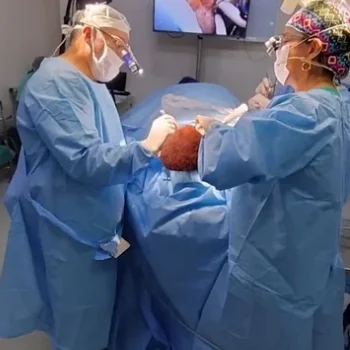
Organized by the Brazilian Association of Hair Restoration Surgery, the workshop took place on Tuesday, October 13, at Barra Day Hospital in Rio de Janeiro. Dr. Henrique Radwanski chaired the event, with Drs. Francisco Le Voci and Ana Cecilia Androlio serving as co-chairs. Drs. Leandro Maia and João Sodré served as surgical coordinators.
Throughout the day, participating surgeons demonstrated a variety of follicular unit excision (FUE) techniques, devices, and instruments. The five live procedures offered attendees an opportunity to compare different approaches to graft harvesting and implantation.
Frontotemporal Recession and the Dull Needle Implanter Technique
The first case involved a male patient with frontotemporal recession. Drs. Mauro Speranzini and Solon Eduardo harvested 600 follicular units from the donor area. They then demonstrated the dull needle implanter (DNI) technique, in which recipient sites are created in advance and grafts are inserted using blunt-tipped implanters. Attendees were able to observe both the harvesting and implantation phases.
Comparing Long-Hair and Non-Shaven FUE
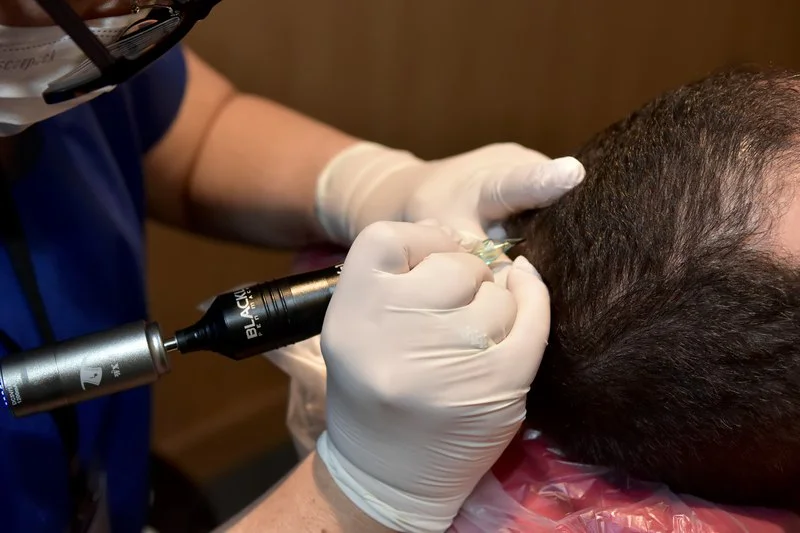
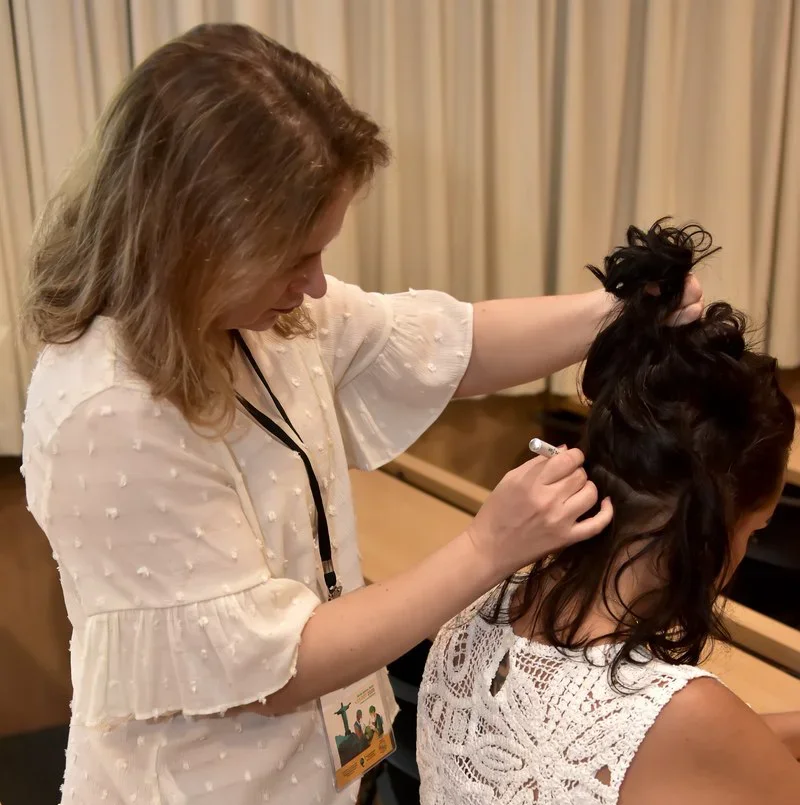
In an adjacent operating room, Drs. Maíra Merlotto and José Rogério Regis performed surgery on a 60-year-old woman. The procedure demonstrated two FUE approaches: long-hair FUE and non-shaven FUE. The comparison illustrated differences in graft harvesting with long hair retained and with selected hairs clipped.
Hair Restoration in Afro-Textured Hair
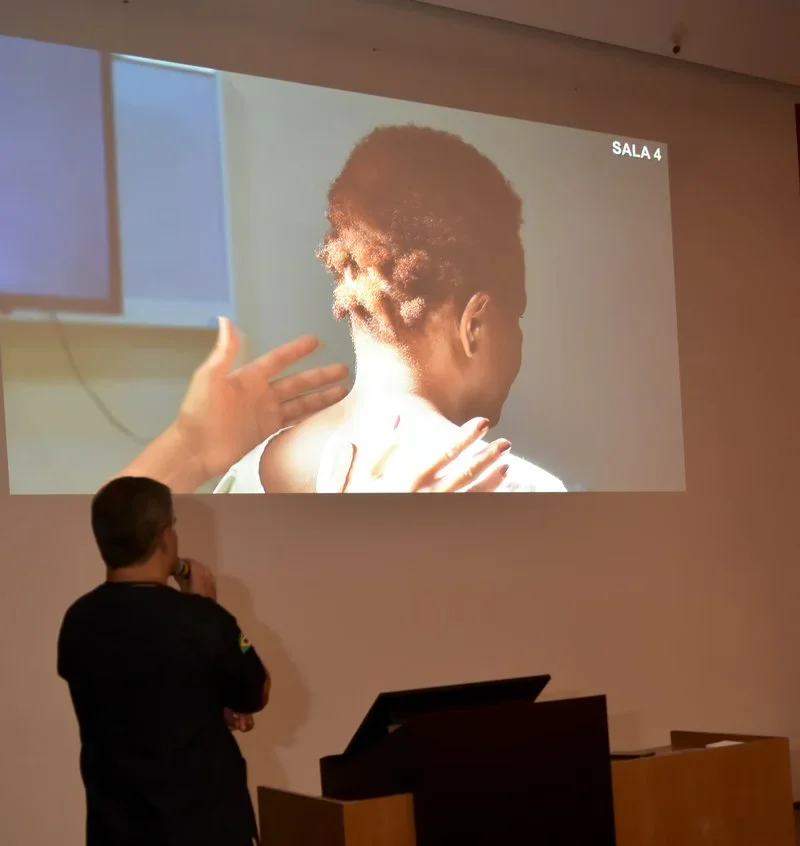
The third case involved a woman of African descent with tightly curled hair. Drs. Marta Zollinger and Juan Maldonado used the Zeus device to harvest approximately 500 follicular units by FUE, followed by graft implantation using sharp implanters. The surgeons highlighted the technical challenges and potential pitfalls associated with harvesting Afro textured hair.
Eyebrow Transplantation
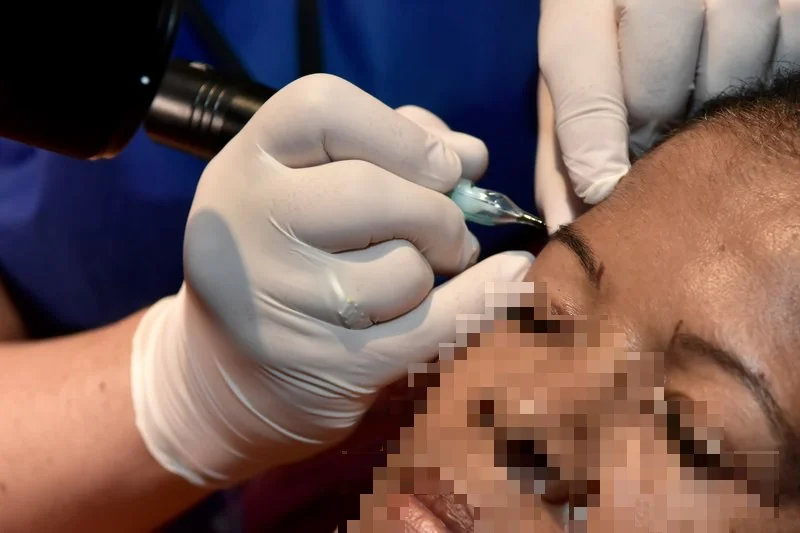
This case demonstrated two harvesting techniques in the same patient. First, Dr. Rogério Régis performed follicular unit transplantation (FUT), removing a short scalp strip that was subsequently dissected into follicular units under microscopic magnification. Dr. Veruska Biagi then performed long-hair FUE harvesting. Dr. Christine Graf implanted the grafts, approximately 350 per eyebrow, demonstrating how long-hair grafts allow the anticipated eyebrow shape and appearance to be visualized immediately after placement.
Correction of a Beard Defect
In the final procedure, Dr. Ito Meireles treated a 35-year-old man seeking correction of a beard defect. Using FUE, he harvested 1,600 grafts and inserted them with sharp implanters. This demonstration extended the scope of the workshop beyond scalp and eyebrow restoration, highlighting the application of FUE and implanter techniques to facial hair reconstruction.

Conclusion
By bringing together five distinct clinical cases, the workshop showcased the versatility of contemporary hair restoration surgery. Attendees observed pre-made recipient sites combined with dull needle implanters, long-hair and non-shaven FUE, harvesting techniques for Afro-textured hair, eyebrow transplantation, and beard reconstruction. The live demonstrations encouraged practical learning and exchange among international colleagues.