Rome Live surgery Workshop 2026: Education, Innovation, and International Collaboration in Hair Restoration Surgery
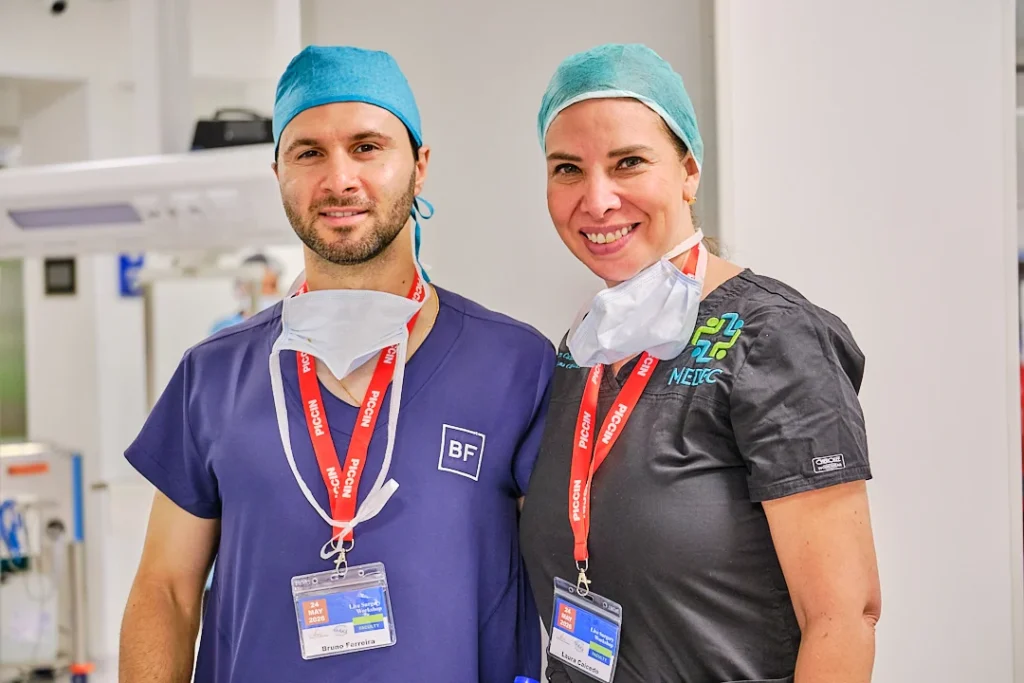
Article written by workshop Chairs, Drs. Laura Caicedo and Bruno Ferreira.
Rome became the center of surgical education and innovation on May 24, 2026, as ISHRS Europe and S.I.Tri. joined forces to host the Live Surgery Workshop at Villa Salaria Clinic following the successful 48th S.I.Tri. International Congress.
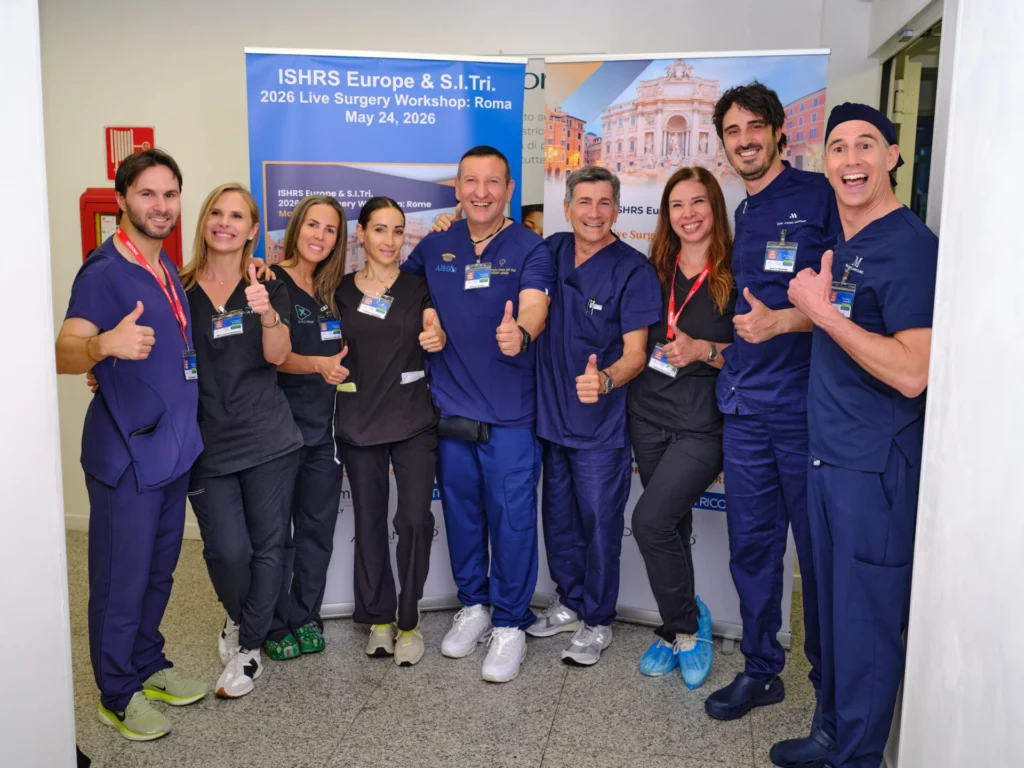
Chaired by Dr. Bruno Ferreira and Co-Chaired by Dr. Laura Caicedo Albarello, the workshop brought together an international faculty, moderators, assistants, and attendees from across Europe, Latin America, and the Middle East. Designed as an immersive educational experience, the event provided participants with the opportunity to observe a diverse range of contemporary hair restoration techniques performed live by internationally recognized experts.
This year’s workshop was particularly significant as it took place during the 30th anniversary celebration of the Italian Society for Hair Science and Restoration (S.I.Tri.), adding even greater meaning to an already exceptional educational event.
A Day Focused on Learning and Collaboration
From the opening session, the atmosphere was highly engaging and collaborative. Faculty members demonstrated remarkable teamwork and openness, while attendees actively participated throughout the day.
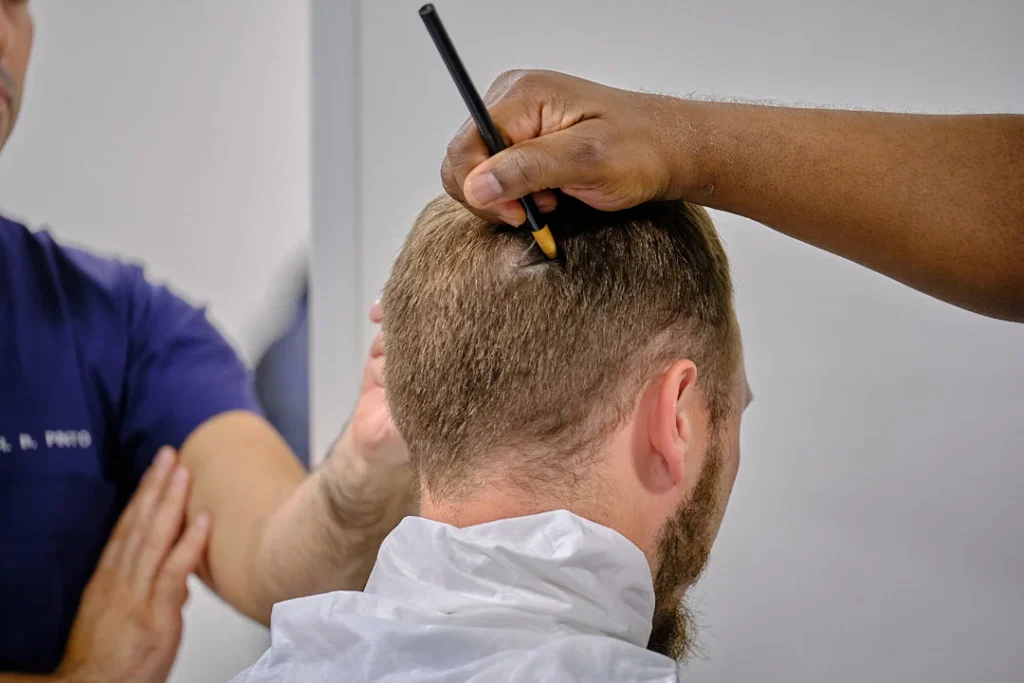
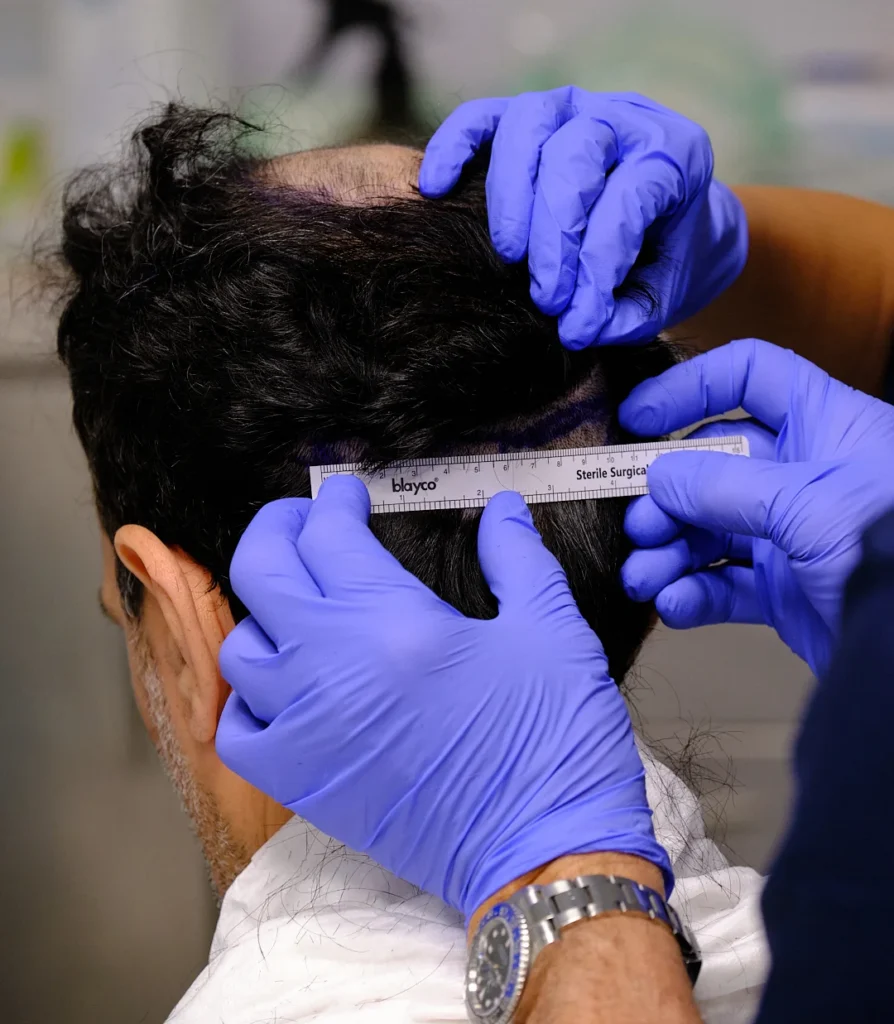
Beyond the technical demonstrations, the workshop emphasized the thought processes behind successful surgery. Discussions focused on surgical planning, intraoperative decision-making, technical adaptations, and the subtle details that often distinguish good outcomes from exceptional ones.
Three Operating Rooms, Three Distinct Surgical Approaches
The workshop featured three simultaneous live surgeries, each highlighting a different aspect of modern hair restoration surgery.
Operating Room 1: Combined FUT and Non-Shaven FUE for Vertex Restoration
The first operating room focused on vertex restoration using a combination of FUT and non-shaven FUE techniques.
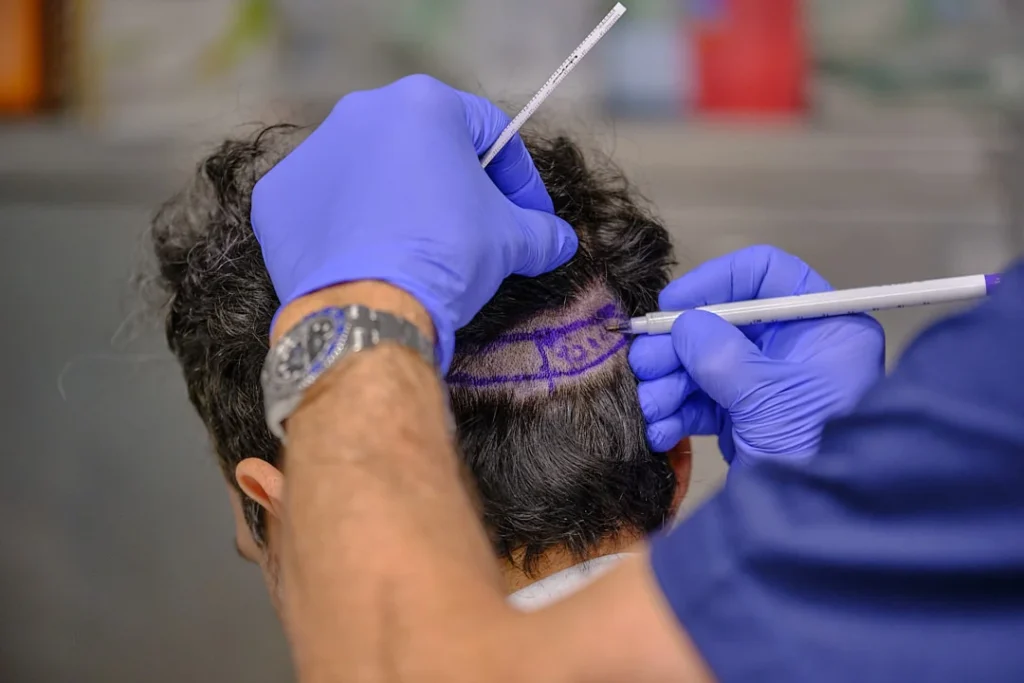
Dr. Marco Toscani performed FUT harvesting, recipient site creation, and forceps implantation, while Dr. Maria Asensi demonstrated non-shaven FUE extraction using the Trivellini® Mamba device. Dr. Edward Ball created recipient sites and completed implantation using KNU® dull implanters.
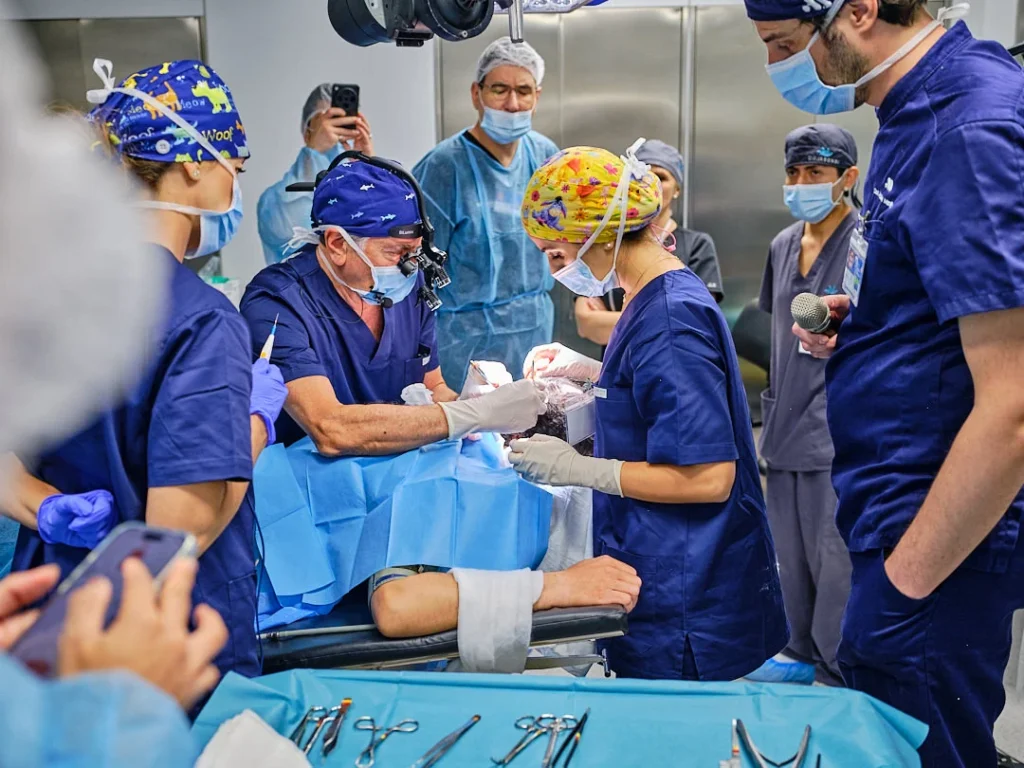
This case offered attendees a unique opportunity to compare donor harvesting strategies within the same treatment plan. It also reinforced the continued value of FUT in selected cases while demonstrating the growing demand for non-shaven FUE among patients seeking minimal visible donor-area preparation.
Operating Room 2: Shaven FUE Frontal Hairline Reconstruction
The second operating room showcased frontal hairline reconstruction using a shaven FUE approach.
One of the highlights was Dr. Christian Bisanga’s live demonstration of motorized FUE utilizing the newly released Trivellini® Pulsar device. Participants were able to observe the performance of this new technology in a real clinical setting.
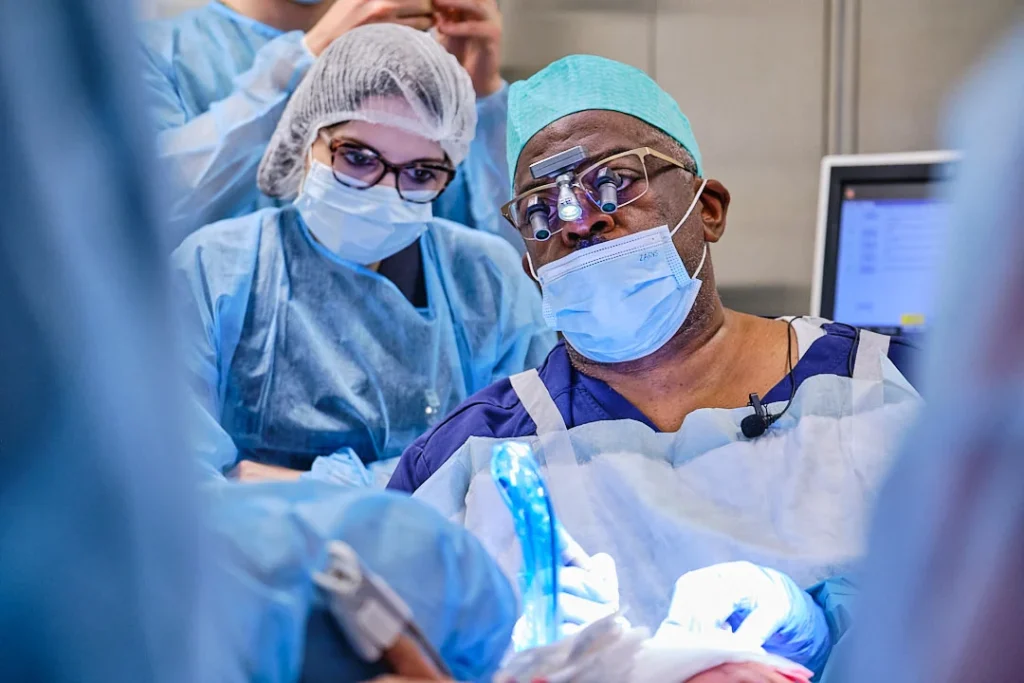
Additional extraction techniques were demonstrated by Dr. Hans Heinicke using a traditional micromotor with sharp punches and by Dr. Bruno Pinto Gonçalves using the Lead M multiphasic device.
Implantation methods included:
- Direct implantation with Hans Biomed® Lion sharp implanters by Dr. Bruno Pinto Gonçalves and Dr. Hans Heinicke
- INRUT® multi-implanters demonstrated by Dr. Conradin Von Albertini
- Pre-made incisions followed by forceps implantation performed by Dr. Christian Bisanga
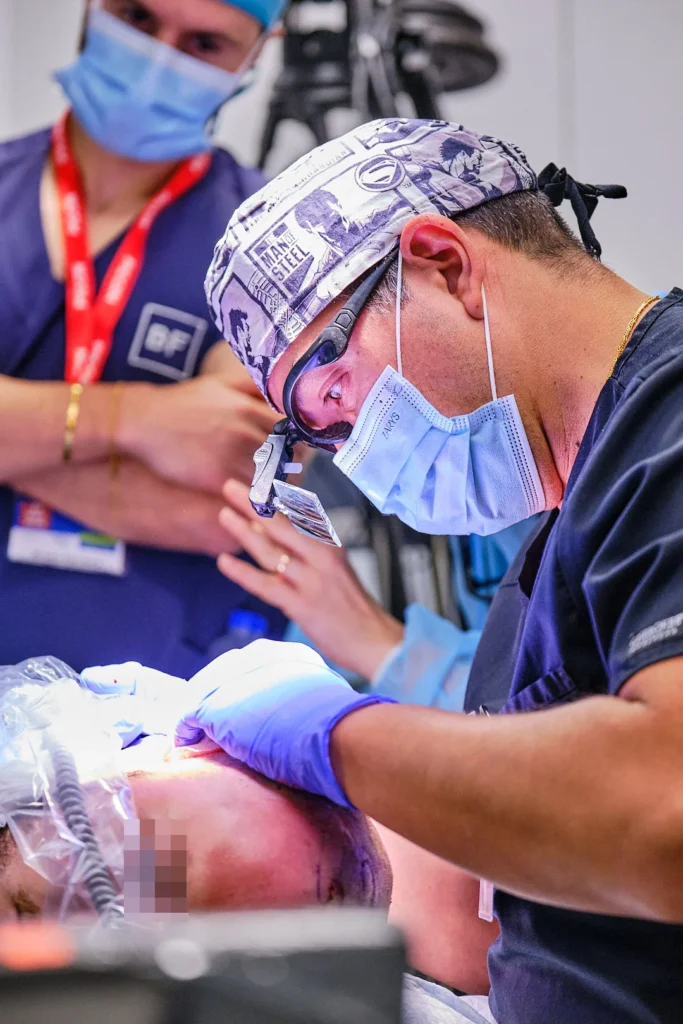
The case proved more technically challenging than anticipated due to tougher skin characteristics and graft popping during implantation. Rather than detracting from the experience, these challenges enhanced the educational value of the session by allowing attendees to observe how experienced surgeons adapt when tissue behavior and operative conditions become less predictable.
Operating Room 3: Long Hair FUE for Eyebrow Transplantation
The third operating room focused on eyebrow transplantation utilizing the long hair FUE technique.
Dr. Sofía Londoño and Dr. Ximena Vila demonstrated long hair FUE harvesting, while Dr. Londoño guided participants through eyebrow design and implantation using Hans Biomed® Lion implanters.
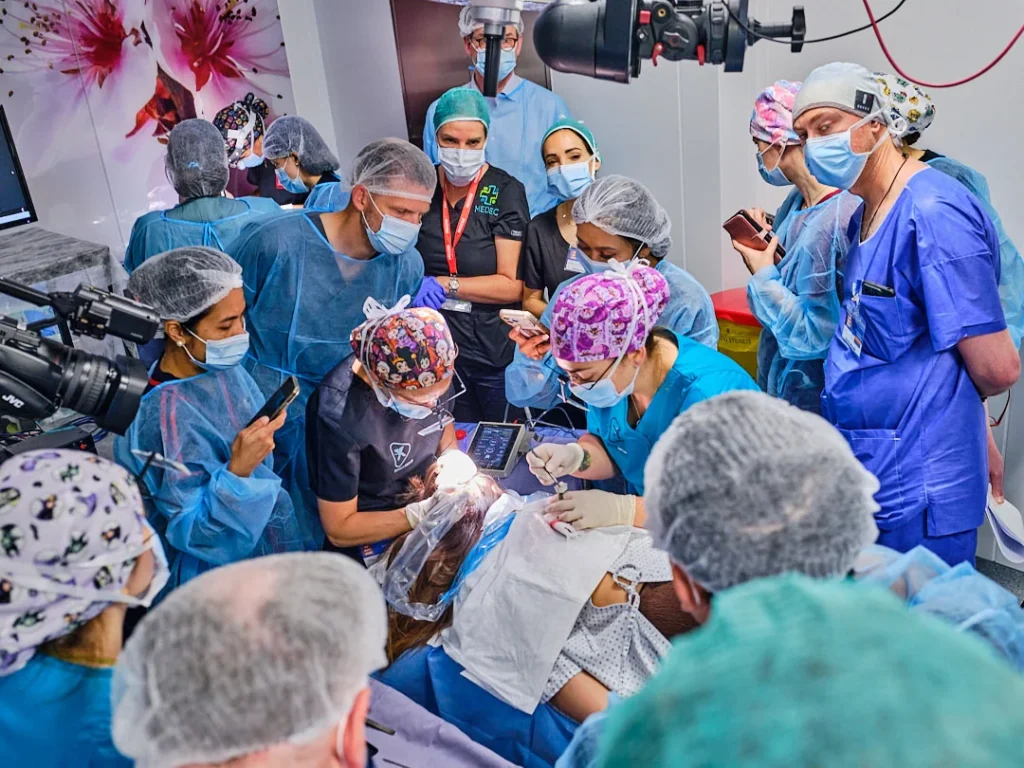
This session highlighted the precision required for successful eyebrow transplantation, where control of angle, direction, curvature, and graft orientation is critical. Preserving the full hair length allowed participants to visualize the anticipated final result throughout the procedure and better understand how each surgical decision influences aesthetics.
Interactive Learning Through Expert Moderation
One of the workshop’s greatest strengths was its emphasis on interactive learning.
Moderators Dr. Andrea Manfreda, Dr. Vincenzo Gambino, and Dr. Chiara Insalaco facilitated discussions within the operating rooms, while Dr. Piero Tesauro, Dr. Asim Shahmalak, and Dr. Georgios Zontos contributed their expertise from the main auditorium.
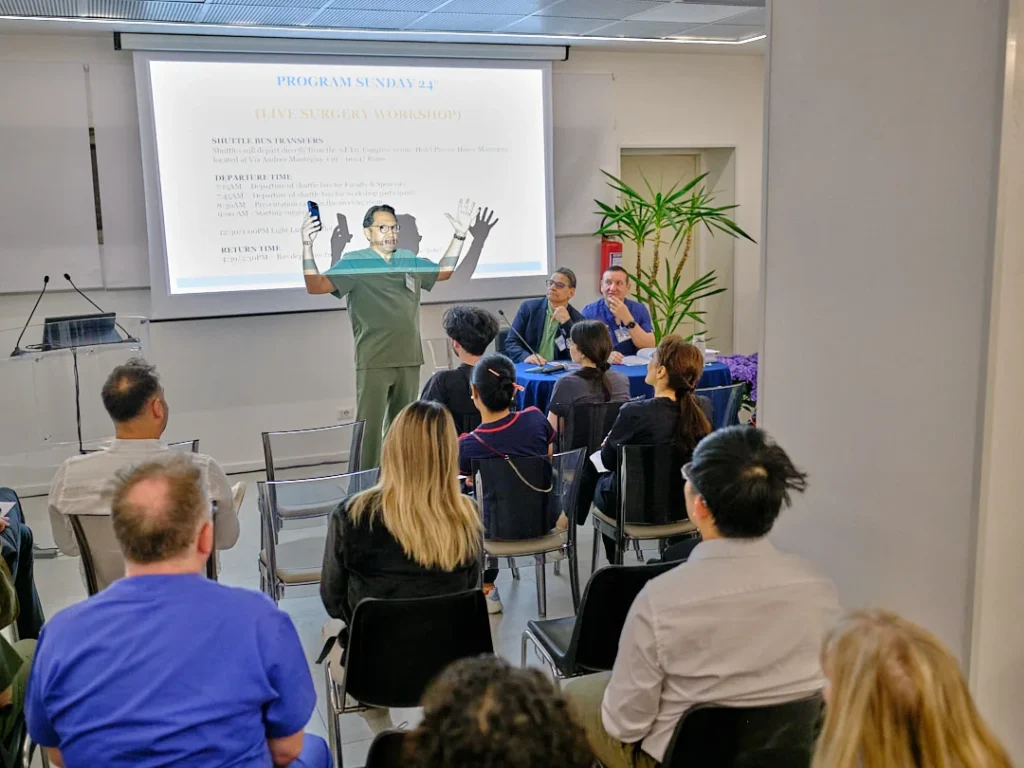
Educational discussions focused on:
- Case planning
- Donor management
- Extraction techniques
- Graft handling
- Implantation strategies
- Surgical ergonomics
- Workflow optimization
- Complication prevention
- Intraoperative decision-making
The moderators played a vital role in transforming live surgical demonstrations into meaningful educational experiences. Their thoughtful questions encouraged faculty members to explain not only what they were doing, but also why they were making specific decisions.
The main meeting room served as a central hub where attendees could follow all procedures simultaneously and engage in discussion. Short educational video segments presented throughout the day further enhanced understanding by revisiting key surgical moments and concepts.
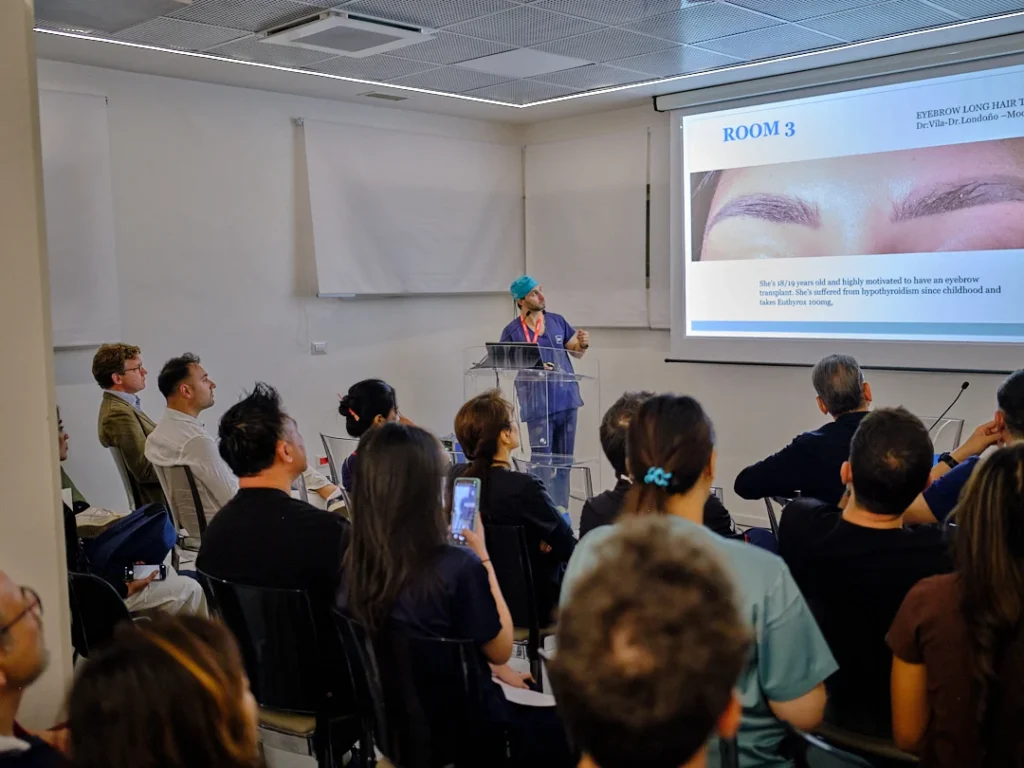
An additional viewing area in the exhibitors’ hall allowed participants to continue following the surgeries while networking with industry partners and taking breaks throughout the day.
Faculty Excellence, Teamwork, and Outstanding Facilities
A defining characteristic of the workshop was the spirit of collaboration among faculty members. Surgeons openly shared their techniques, discussed differing philosophies, and demonstrated respect for alternative approaches.
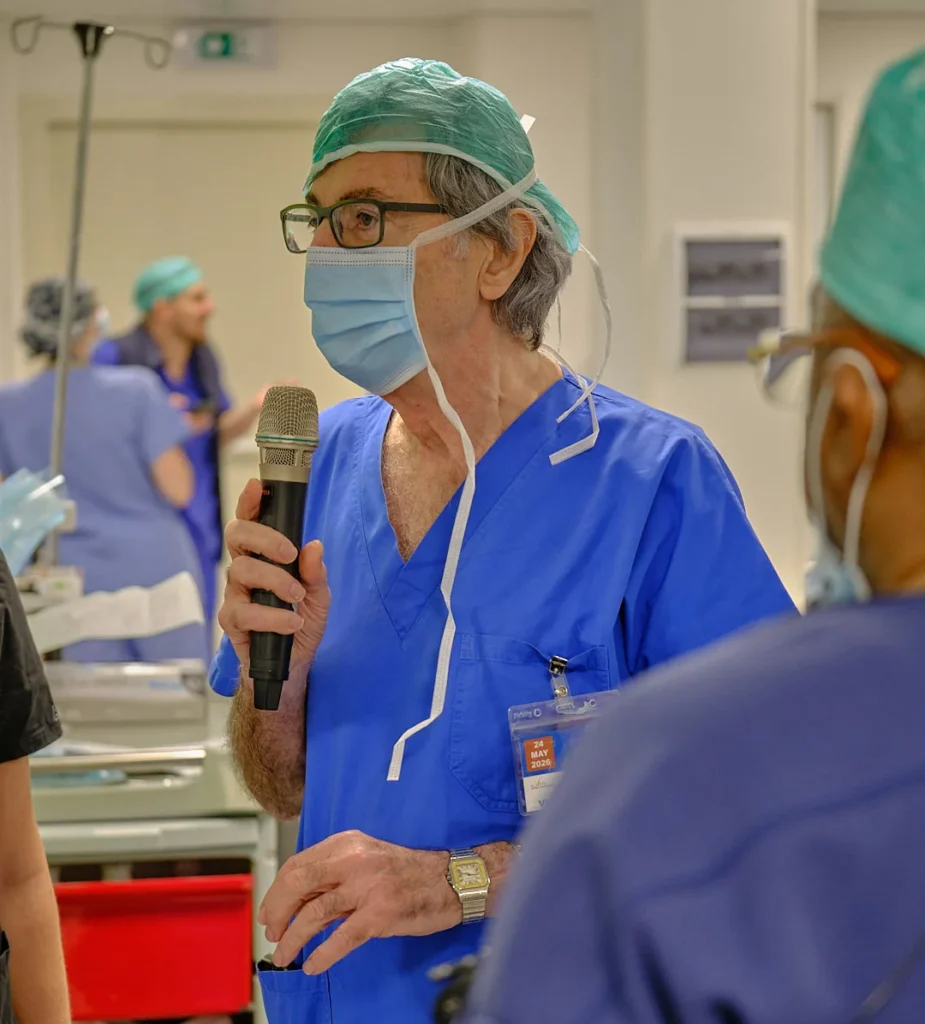
This diversity of perspectives is particularly valuable in hair restoration surgery, where multiple techniques can achieve excellent outcomes. Attendees were able to compare FUT and FUE, shaven and non-shaven approaches, forceps and implanter techniques, direct implantation and pre-made incision methods, as well as scalp and eyebrow transplantation procedures.
The success of the event also depended heavily on the assistants and clinical teams who supported the procedures. Their precision, efficiency, and professionalism helped ensure smooth execution throughout the day.
Special recognition goes to Dr. Chiara Insalaco’s team, who provided dedicated support to the faculty and played an important role in maintaining the seamless flow of the workshop.
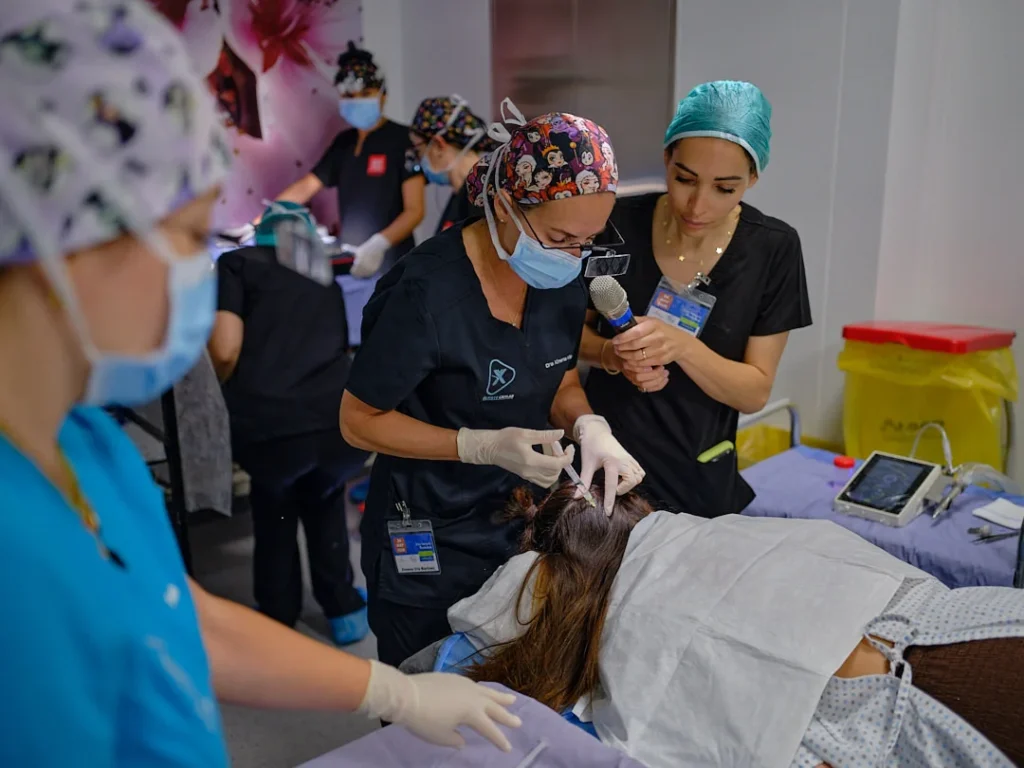
Villa Salaria Clinic offered outstanding facilities and logistical support, with the local team demonstrating professionalism and hospitality from setup through completion.
Looking Ahead
The Rome Live Surgery Workshop 2026 once again demonstrated that the future of hair restoration surgery is built upon innovation, education, collaboration, and continuous learning.
For attendees, the workshop provided direct exposure to multiple surgical techniques and treatment philosophies. For faculty, it created an environment for teaching, mentorship, and professional exchange. For S.I.Tri. and ISHRS Europe, it reinforced the value of live surgical education as one of the most effective ways to advance the field.
Acknowledgments
We extend our sincere gratitude to all faculty members, moderators, assistants, attendees, Villa Salaria Clinic, Andrea Vanni and the S.I.Tri. organizing team, Dr. Bessam Farjo, Dr. Piero Tesauro, Dr. Conradin Von Albertini, and Dr. Marco Toscani for their support and contribution to this successful event.
Rome provided the setting, but it was the people – surgeons, moderators, assistants, clinical teams, and participants, who transformed the workshop into a truly memorable educational experience.